The challenge of academic exam management
The institution relied on a very outdated application to manage exam planning. Over time, the system became obsolete and was no longer able to support new business and academic requirements.
Many key functionalities were not available to end users and had to be handled manually through direct database scripts executed by the support team. This not only created operational bottlenecks but also introduced risks and a strong technical dependency.
In addition, exam session management was fragmented across multiple applications, making administration more complex and limiting the system’s ability to scale.
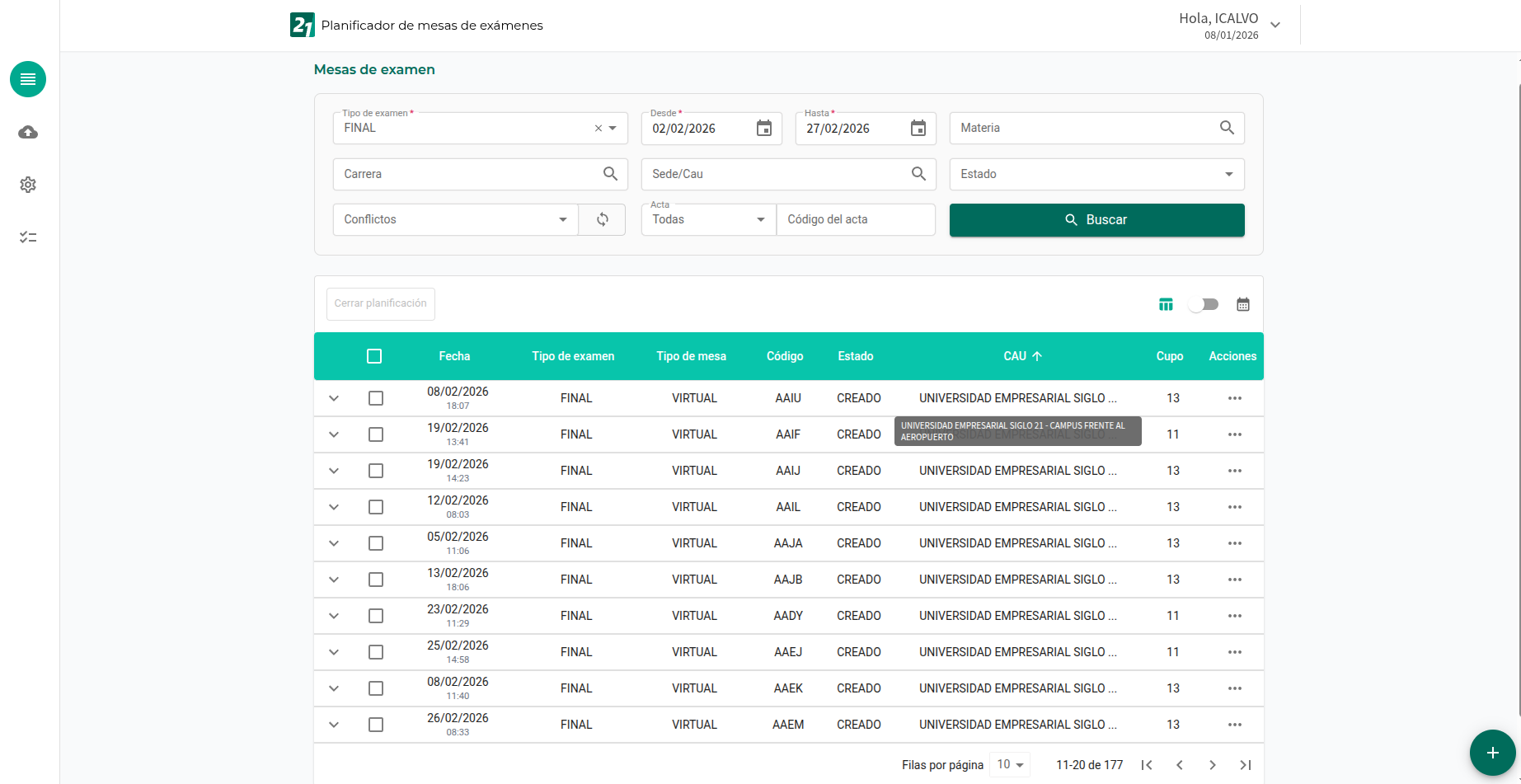
Project goal: modernizing exam planning management
The goal was to redesign exam planning from the ground up, creating a modern, configurable application prepared to adapt to future changes without requiring code modifications.
The solution needed to simplify exam session management, support both in-person and online exams, integrate with the student portal, the grade submission platform, and the exam platform, maintain compatibility with the existing database, and enable functional scalability without increasing technical complexity.
A technological solution for exam planning management
A new exam planner was developed based on a flexible, configuration-driven model. Instead of defining each exam session in a rigid way, the application allows institutions to establish rules and configurations that govern and validate the creation of exam sessions.
From the application, the institution can define clear rules regarding exam modalities, subjects, dates, and schedules, as well as classroom assignments and student distribution for in-person exams. All of this is managed in a centralized and flexible manner.
The entire workflow is designed so that validations and rules are handled through configuration, allowing new requirements to be absorbed without additional development.
Architecture and technologies
The solution was developed from scratch while preserving the original database to ensure backward compatibility, alongside improvements to the data model.
The architecture is based on an Oracle database, a Java Spring Boot backend, and a React frontend. The infrastructure runs on AWS, incorporating serverless services and Lambda functions to automate processes and replace traditional scheduled tasks.
The system integrates both with the student portal—where exam registration takes place—and with the exam platform used for online assessments.
Implementation process of the new exam system
As academic needs grew and the limitations of the legacy system became increasingly evident, the team took the initiative to drive the project forward, working closely with client stakeholders to validate the approach and move into implementation.
The result was a unified, modern application aligned with real academic management needs.
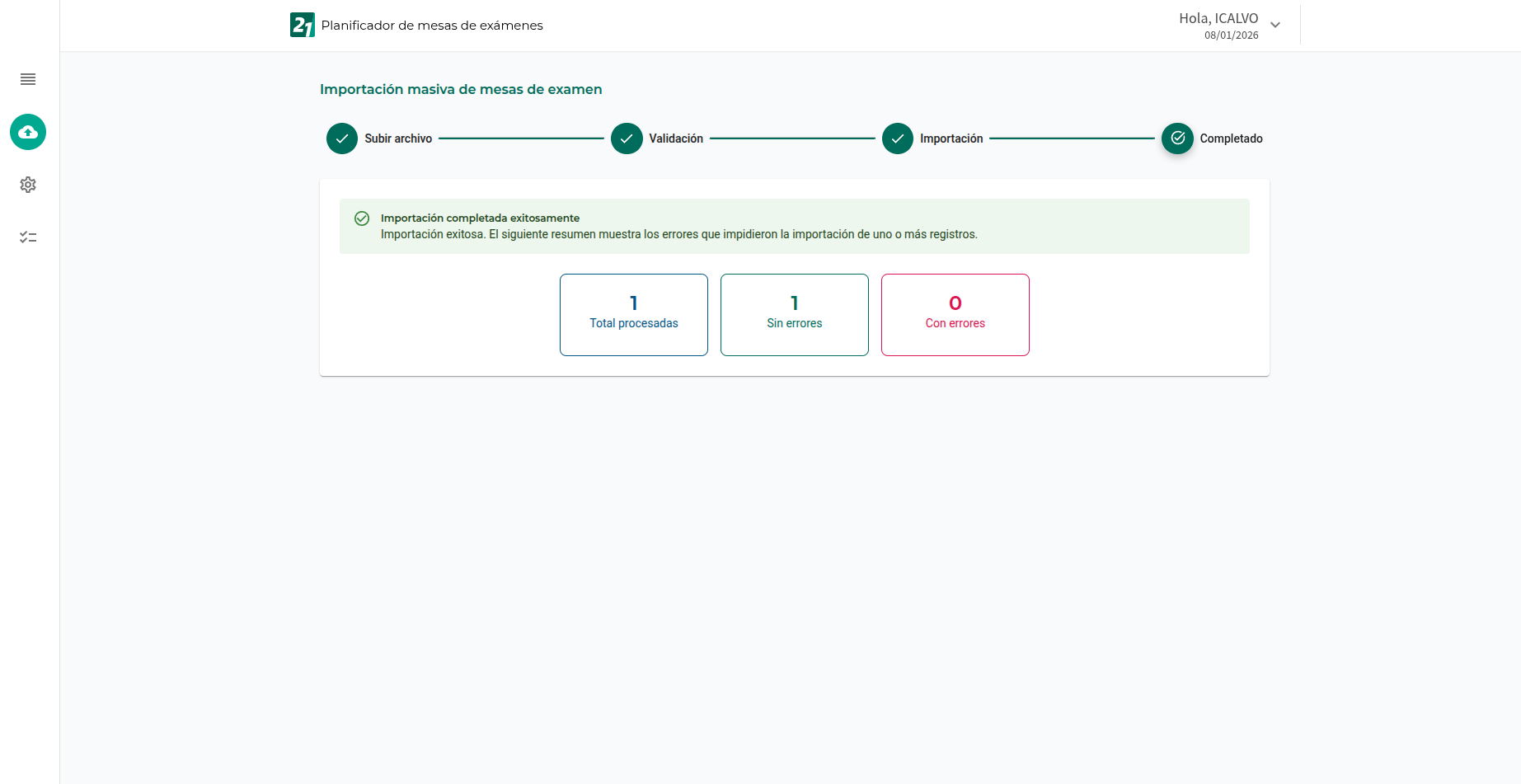
Results achieved in exam planning management
The implementation completely simplified exam session management, eliminating manual processes and reducing dependency on the support team. Functionalities that were previously spread across multiple applications were consolidated into a single system, giving academic teams autonomy to define rules and configurations directly within the platform.
In addition, the solution is prepared to scale and adapt to new requirements without requiring code changes.
The solution was recently deployed to production and has already begun to be used in the first exam periods, marking a key step in the modernization of the academic ecosystem.
We are designing the future of education. Let’s talk.